Goutweed
Invasive Species | Terrestrial Plants

Goutweed
(Aegopodium podagraria)
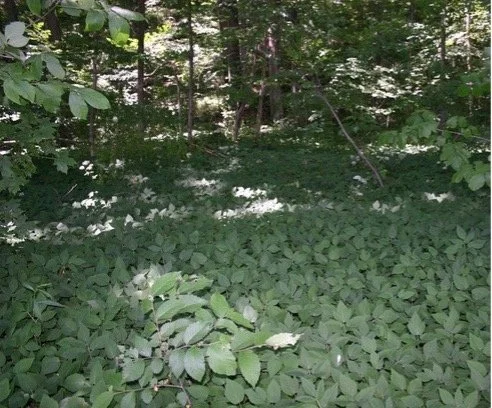
Goutweed (Aegopodium podagraria) is a perennial herb in the carrot family (Apiaceae) that is native to Europe and Asia. It was introduced to North America as ornamental groundcover because of its attractive foliage and ability to thrive in a wide range of growing conditions, particularly in shady gardens where other plants struggle. Once established, it spreads rapidly through an extensive network of underground rhizomes, forming dense colonies that are extremely difficult to remove.
Even small pieces of rhizome left in the soil can regenerate into new plants, allowing infestations to persist for many years.

Impacts:
Goutweed poses a significant threat to native ecosystems because it forms thick, continuous mats of vegetation that outcompete native plants for sunlight, water, nutrients, and space. These dense colonies reduce plant diversity by preventing native wildflowers, grasses, and tree seedlings from establishing and growing. As native vegetation declines, the quality of habitat available for pollinators, birds, and other wildlife is also reduced. Infestations often begin in residential gardens before spreading into forests, parks, trails, and other natural areas through dumped yard waste or the movement of contaminated soil. Due to the fact that goutweed spreads primarily through underground rhizomes, controlling established populations is labour-intensive and often requires several years of repeated management.
Species identification:
You can spot goutweed by looking for these key features:
Leaves
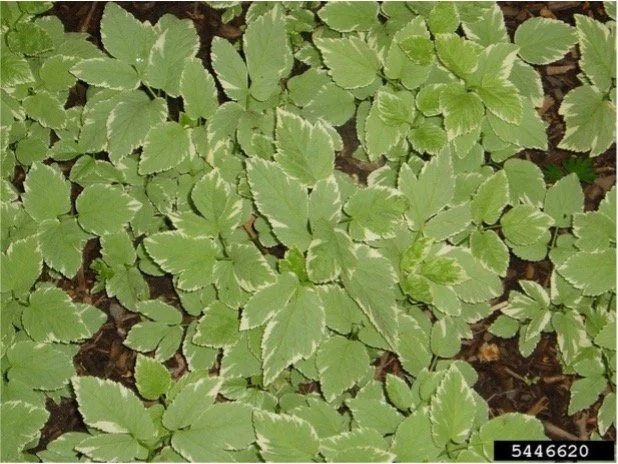
Compound leaves divided into three toothed leaflets.
Lower leaves may have up to nine leaflets.
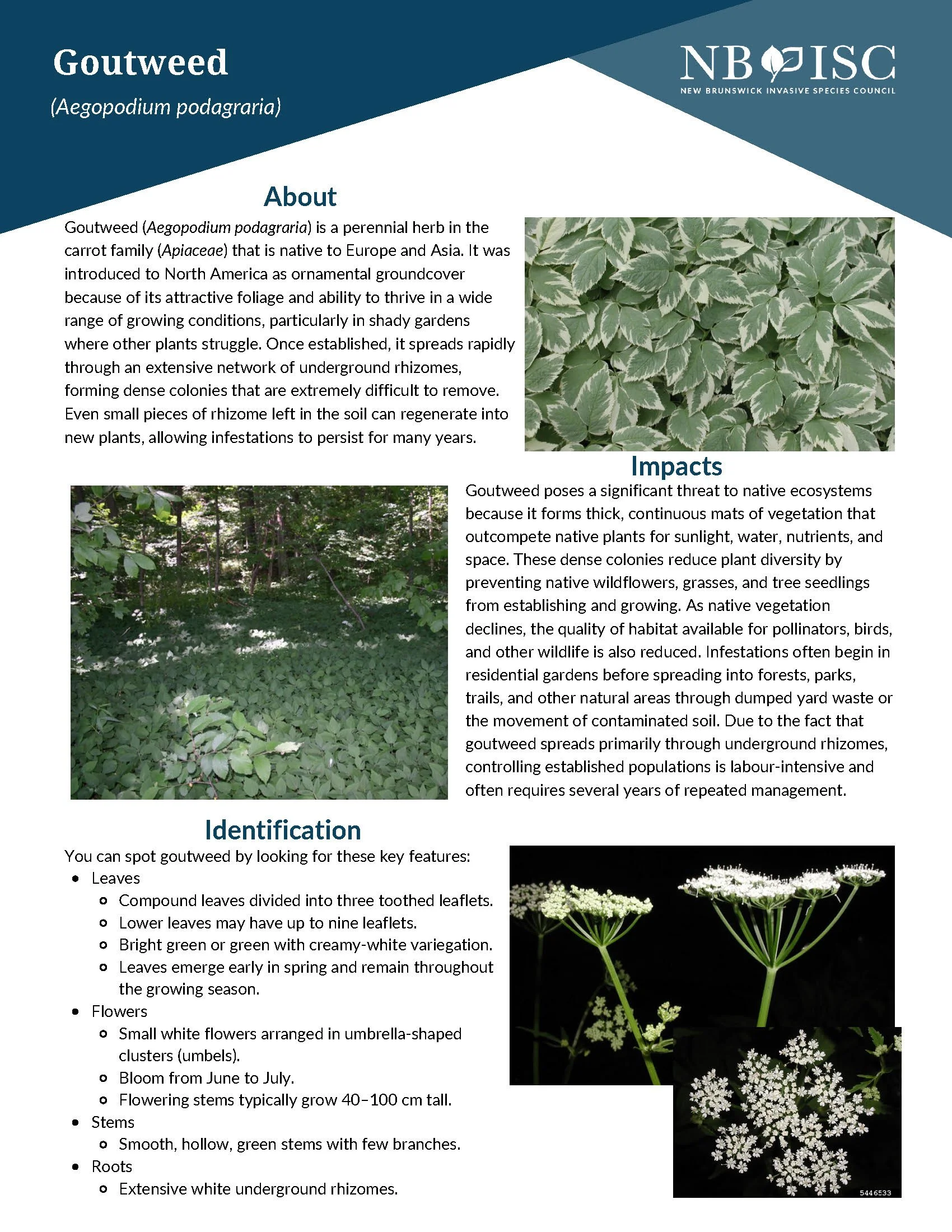
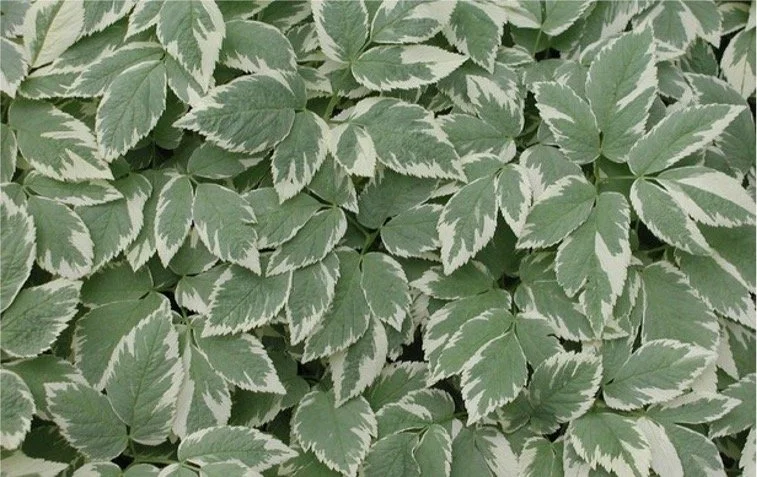
Bright green or green with creamy-white variegation.
Leaves emerge early in spring and remain throughout the growing season.
Flowers
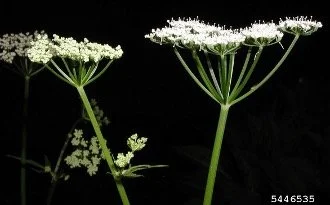
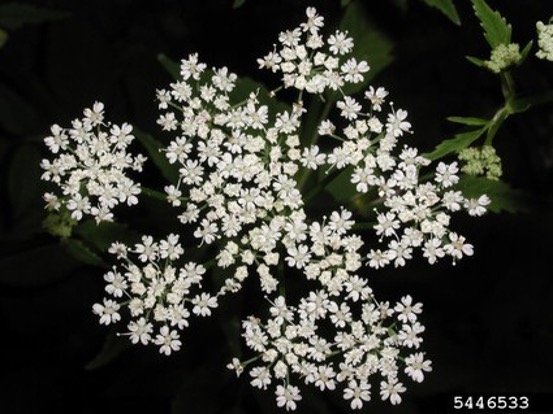
Small white flowers arranged in umbrella-shaped clusters (umbels).
Bloom from June to July.
Flowering stems typically grow 40–100 cm tall.
Stems
Smooth, hollow, green stems with few branches.
Roots
Extensive white underground rhizomes.
Prevention:
Preventing the spread of goutweed is the most effective way to protect native habitats. Homeowners and gardeners should avoid planting goutweed, including the variegated ornamental variety, as both forms are capable of spreading beyond garden boundaries. If f goutweed is already present, small infestations should be removed as early as possible by carefully digging out the entire rhizome system.
Garden waste containing rhizomes should always be disposed of in the garbage rather than composted or dumped in natural areas, as even small root fragments can produce new plants. Cleaning soil from gardening tools, footwear, and equipment after working in infested areas can also help prevent the accidental spread of rhizomes to new locations.