Phragmites/Common Reed
Invasive Species | Terrestrial Plants


Phragmites/
Common Reed
(Phragmites australis ssp. australis)
French common name: le phragmite commun
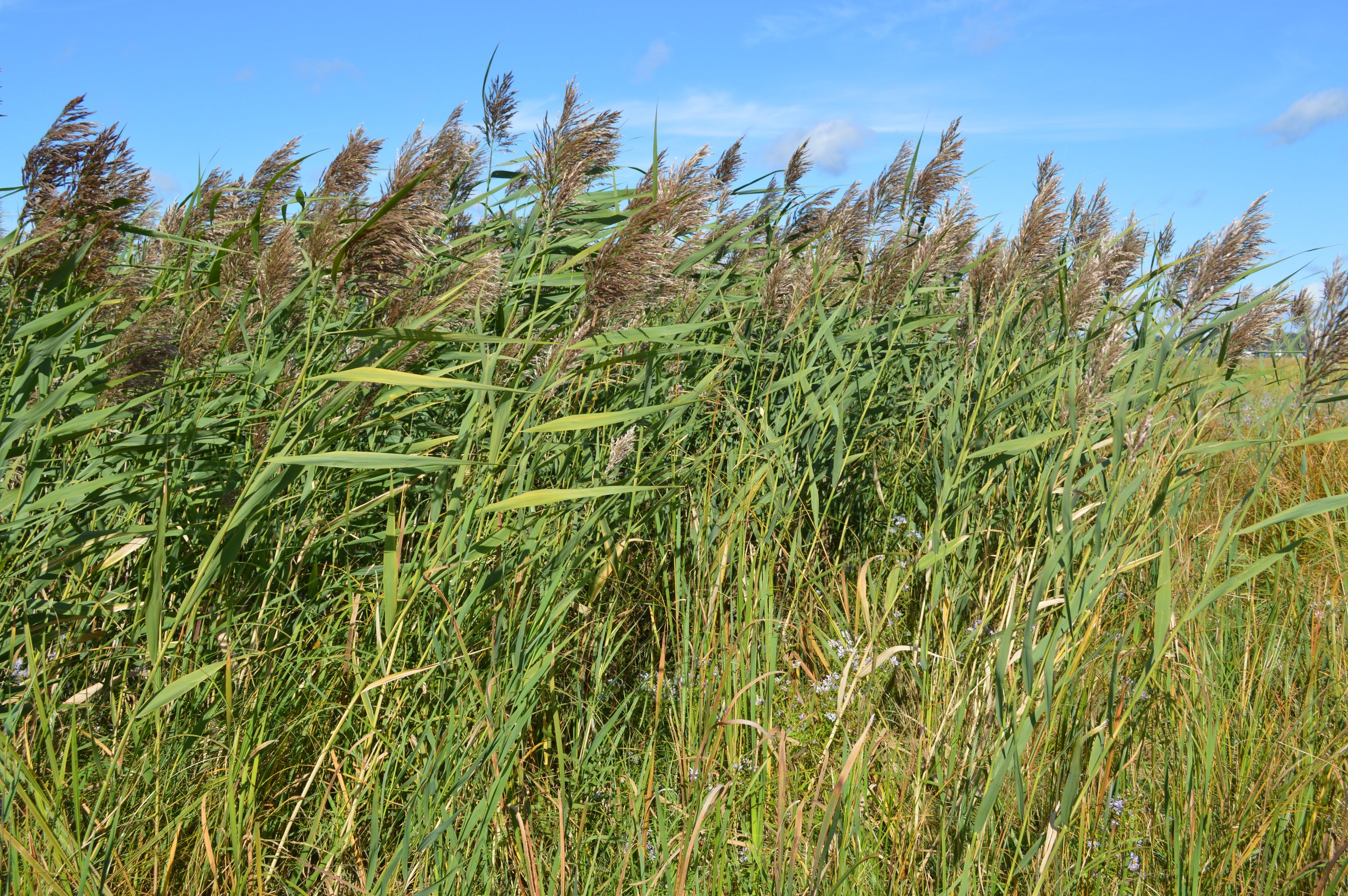
Phragmites australis is a type of perennial reed grass commonly found in wetlands, field edges, and along shorelines. Individual stems are tall (1–5m) and have large flowering seed heads and long slender leaves. There are two sub-species in Canada: the native Phragmites australis ssp. americanus and the highly invasive Phragmites australis ssp. australis (aka. Common Reed), native to Eurasia.
When invasive Phragmites invades, it establishes rapidly and forms tall, dense monocultures that outcompete native plant species and reduce food and habitat for various wildlife species. Stands of invasive Phragmites have dense underground rhizome structures that propagate new plants, and large seed heads which make removing/ managing the plant very difficult.

Description:
Life Cycle- Persists annually, begins producing new growth in spring, persists late into the summer. Come winter, dead stems will dry and remain standing.
Height- Tall reed with a height of 3–5m (12–15ft ), but in NB has been observed at smaller heights around 2–4m (6–12ft).
Leaves- Long lance shaped blue/green leaves with smooth, sharp edges. Adheres tightly to the stem as a sheath.
Flowers- Large and fan-like with many branches. Appears purplishwhen freshly bloomed and light tan and fluffy later in thegrowing season.
Stem- Solid green colour, hollow and very sturdy. Rough to the touch with a dull appearance.
Bloom Time- Flowers from early July- to late September, deadflowerheads remain.
Key ID Features

Very tall (>2m) compared to native grasses, with a large “fluffy” flowerhead. Dead stems and flowerheads will persist through the winter, stems very rigid.

Forms dense monocultures, no native vegetation will be growing in the stand
Common Look-a-Likes
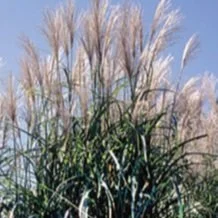
Miscanthus Grasses (aka Silvergrass)
Silver/white coloured, fine textured flowerheads that lean to one side
Similar height to Phragmites, grows in similar monocultures

Brome Grasses (Bromus spp.)
Much smaller than Phragmites (60–120 cm), with similar shaped flowerheads
Stems are not rigid or tough, and break easily
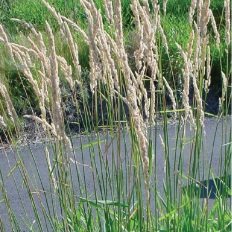
Reed Canary Grass (Phalaris arundinacea):
Much smaller than Phragmites (60–120 cm), with less leaves and a more pronounced stem
Long, slender flowerheads that are dense and unbranched
Resources
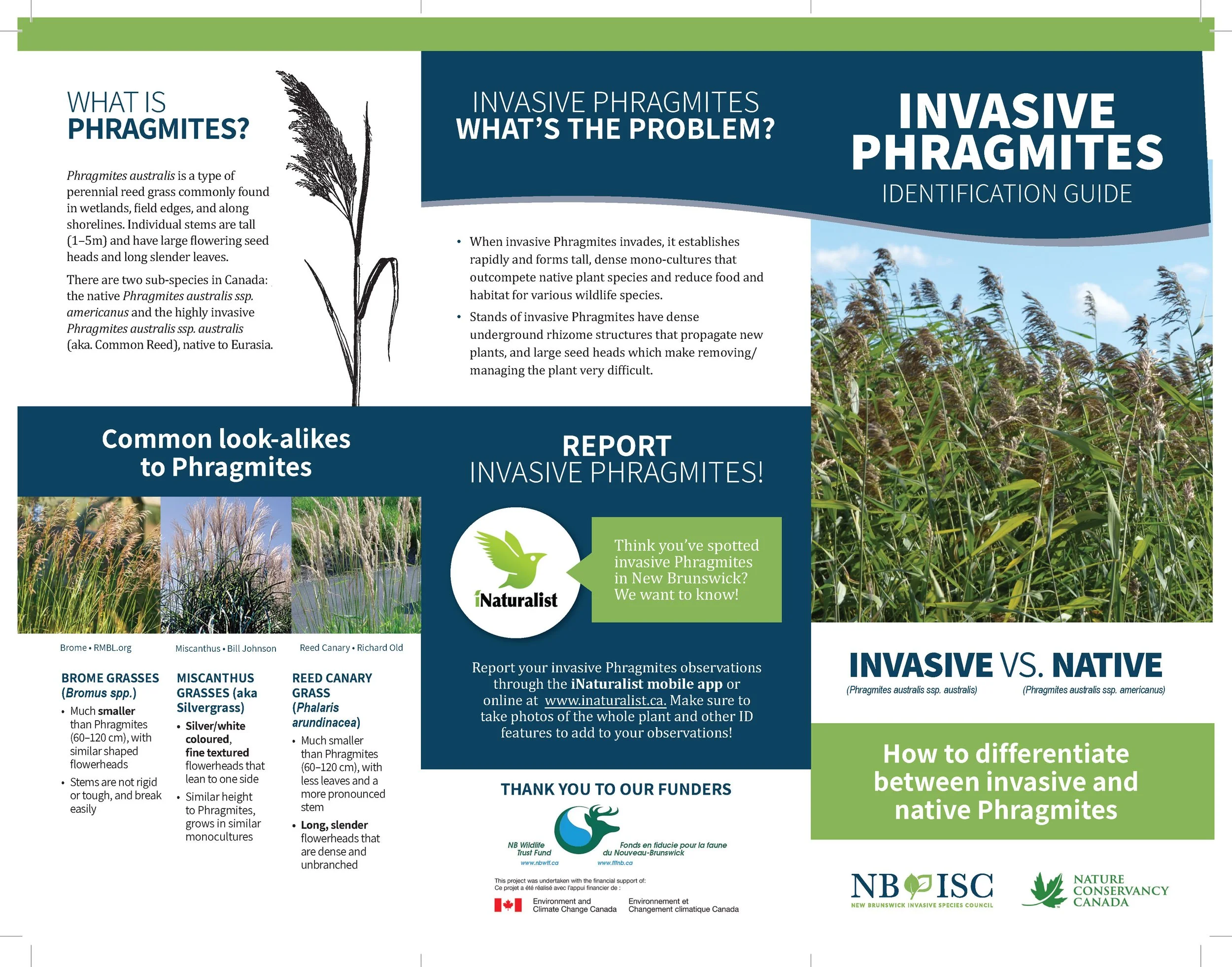
Check out some of our free helpful resources